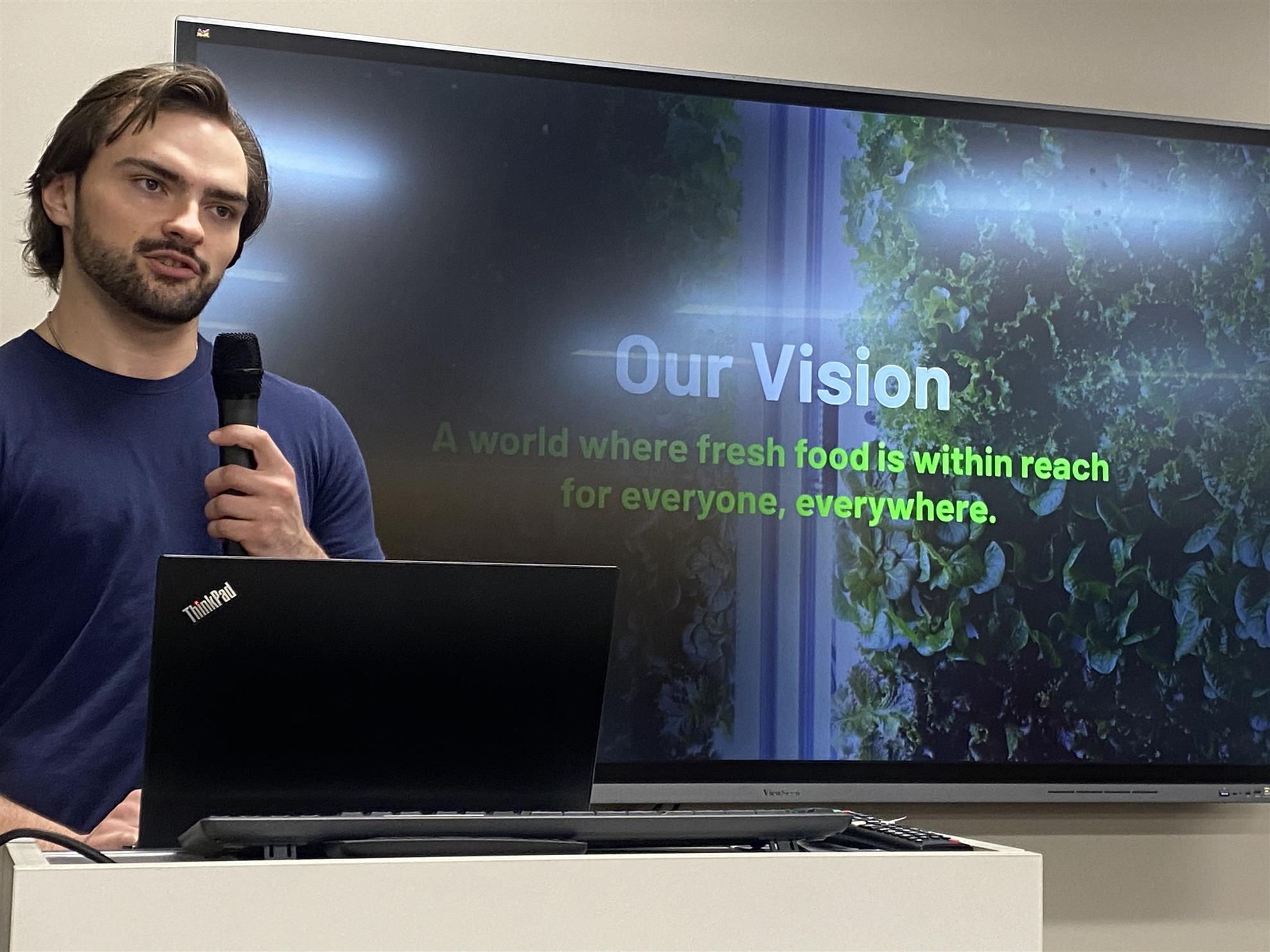
Marshfield Rotary recently enjoyed a fascinating presentation by Nick Varner, Farm Manager at the Fork Farms hydroponic garden at UWSP-Marshfield. Nick shared details of a groundbreaking collaboration between Sanford Health Marshfield Clinic, UWSP-Marshfield, and Fork Farms—a project redefining local food systems. The brainchild of Jay Shrader (Marshfield Clinic), Tony Andrews (UWSP-Marshfield), and Alex Tyink (Fork Farms), this initiative has created the largest hydroponic garden in Central Wisconsin, remarkably housed right inside a renovated university classroom.
Using six Flex Acre units that maximize vertical growing space, the farm produces 90–100 lbs. of fresh produce every week, including lettuce, dill, cilantro, basil, and parsley. This high-tech indoor setup is so efficient that it matches the output of a 10,000 acre traditional farm. The vision is simple: Fork Farms believes in “A world where fresh food is within reach for everyone, everywhere”. At the clinic, this produce is used for the cafeteria and the innovative Food Is Medicine and Produce Prescription programs, while surplus is donated to St. Vincent de Paul and Soup or Socks.
The quality of the harvest is scientifically significant, with studies labeling the lettuce a "superfood." It contains 65% more calcium and 83% more magnesium than average lettuce, offering massive nutritional boosts alongside major environmental savings. Currently managed by Nick and a part-time AmeriCorps employee, the farm is already planning for expansion. The success in Marshfield is serving as a blueprint for the future, as Sanford Health is looking to implement similar farms in communities throughout the Midwest.
This sustainable growth initiative launched last summer, with planting officially beginning in September 2025, shows how community members working together across industries can generate meaningful programs and opportunities. Within the span of only a few months, the Marshfield farm has made a big impact on the community. By using cutting-edge technology to grow nutrient-dense produce year-round, the partnership supports the health of patients, staff, and visitors while addressing local food insecurity.