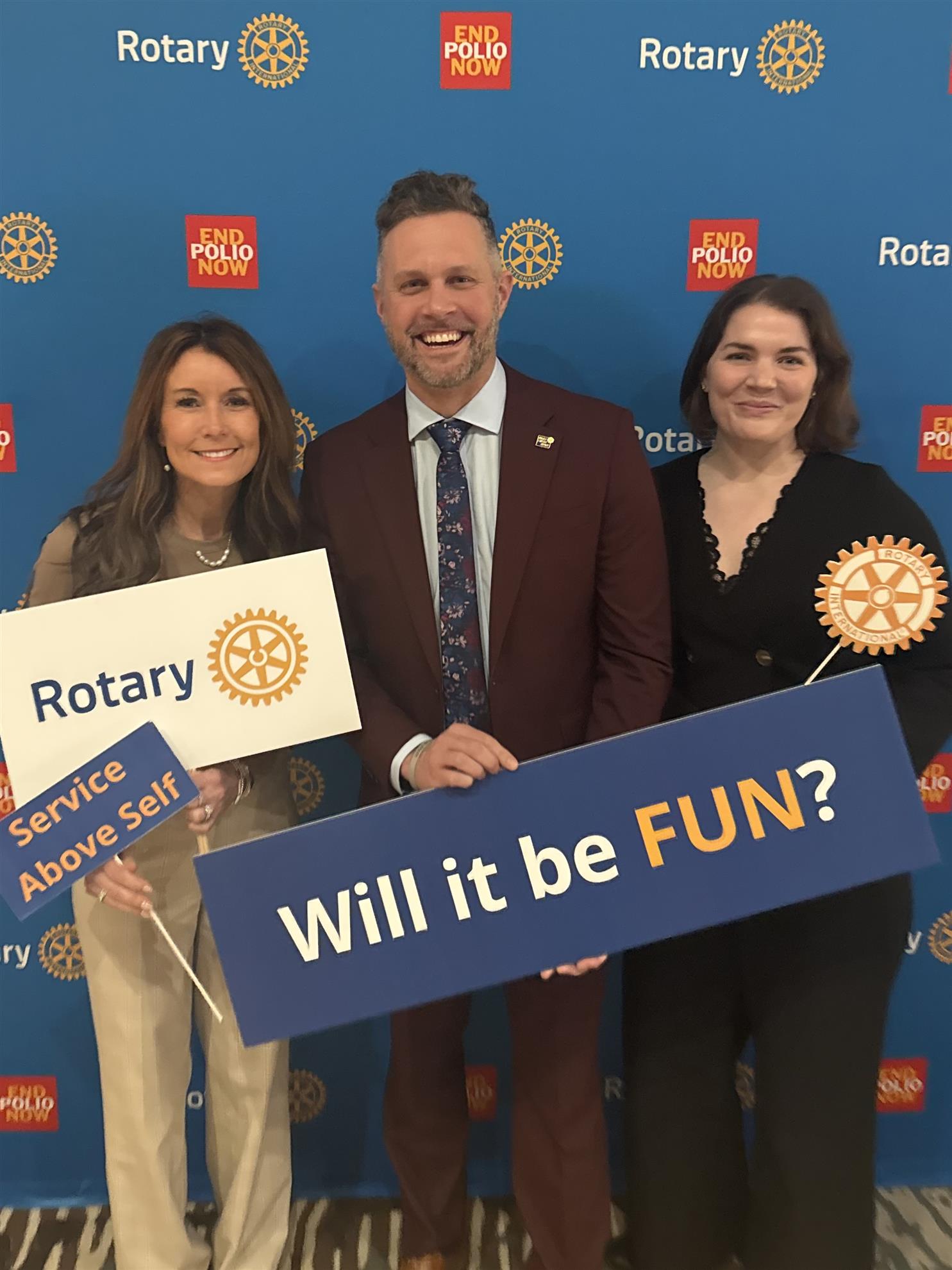
Marshfield Rotary had the pleasure of hearing from Kaelie Gomez about her experience attending the President Elect Training Seminar. She presented her top 10 takeaways from this year's training:
1. PETS Is “President-Elect Training Seminar”, But Equips Many Roles
PETS is a multi-district equipping weekend for club presidents-elect, presidents-elect nominees, club secretaries, emerging Rotary leaders, and assistant governors. Our club has budgeted to send our president-elect annually; this year we added our president-nominee. Attending qualifies us for district grant dollars — empowering us to apply for matching funds for projects like our pollinator garden and Griese Playground equipment.
2. Our 2026-2027 Annual Theme Is "Create Lasting Impact"
The incoming Rotary International President creates an annual theme to commission, challenge, and inspire clubs across the world. I resonate with this coming year's theme–one I look forward to contemplating throughout the next year.
3. Our 2026–2027 Rotary International President Is Olayinka Babalola
Olayinka Hakeem Babalola ("Yinka") is a member of the Rotary Club of Trans Amadi in Nigeria and has deep roots in the Rotary movement, having joined Rotaract as a teenager. He urged Rotary members to focus not just on completing projects, but on ensuring those projects generate multigenerational results. He also emphasized that Rotary changes communities, but also changes us. Service above self transforms us into better versions of ourselves.
4. Our 2026–2027 District Governor Is Scott Ryan
Scott has been a member of the Holmen Area Rotary Club since 2008. He began to deeply invest in Rotary after a trip to Peru to deliver bio-sand water filters to families living on an active garbage landfill and drinking contaminated water. That experience solidified his belief that a single person — backed by Rotary's global network — can make a real difference. Scott is especially active in youth development and notes that Rotary has made him a better dad, husband, businessman, and friend.
5. Succession Plans Unlock Club Potential
It was quickly obvious that having multiple club leaders at PETS was beneficial — we received information from main speakers and district gatherings side-by-side, while breaking out in sessions built for our different roles. In our spare pockets of time, we tested what we were learning against what we were already discussing in the Club, together. The training weekend was one example of the club benefitting from shared vision, planning, and workload–continuity in leadership allows us to layer on our successes, rather than starting over with each new president.
President Darla, President-Nominee Teri, and I do not plan on losing momentum in lining up future leadership. We intend to quickly determine another president-nominee and keep an eye out for emerging leaders. We're also launching a new Presidential Council — meeting roughly monthly — to include the past-president, president, president-elect, president-nominee, and district leaders (currently Ben Bauer) to maintain momentum on strategic priorities.
6. We're Ahead of the Curve on Strategy
PETS messaging centered on four areas of focus for all clubs — and Marshfield Rotary is already actively engaged in all four:
- Increase Our Impact — Refining initiatives, planned giving, service opportunities (our current evaluation of all giving, serving, and fundraising activities)
- Expand Our Reach — Growing membership, increasing Club flexibility and appeal (our meeting adjustments)
- Enhance Participant Engagement — New member orientation, participation expectations, connection opportunities (our new member STAR program
- Increase Our Ability to Adapt — Culture of research, streamlined governance, identifying future leaders (our strategic plan)
It was encouraging to hear we are fully on the right track.
7. We’re a Service Club We Meet Community Needs
Rotary is an easy way to volunteer, plug into community service, mobilize funding, network, and can lead to friendship, but much of that tends to fall into place when we’re driven to meet community needs.
How does this work?
- Identify and prioritize community needs with trusted data sources and those producing it.
- Assess the scale of influence our club and partners can reasonably achieve.
- Select the needs we'll meet.
- Align manpower and monetary resources both presently and in long-term planning.
- Share through public image channels (and when you're genuinely proud of what Rotary building, it comes up conversationally and will spread, too).
- People, companies, and organizations who care about making a real difference see intentional work done, shifting the trajectory of their community. Then, they buy in, too.
8. Serving Together Is Deeply Meaningful
PETS Speaker Richard Kyte, Author and Viterbo University Professor, explained how relationships and community have changed over time. A few noteworthy points he included:
- Happiness has been declining; anxiety, stress, depression, and loneliness have been increasing every year since the 1990s.
- In 1800, the word "friend" appeared in publications ~3x more than the word "self" — by 2000, this was reversed.
- A casual friend is built on ~80–90 hours of time together; a good friend on ~200 hours.
Most people do not have close friends, but do you know where you can make some really nice friends? Rotary. We need to invite people into the club because we care for the world, surely–but also because we care about them as individuals. Find someone to care for, invite them into something of purpose, and invite them into friendship.
9. Rotary Integrated Is Best
Attending with friends and colleagues Ben and Teri reminded me that Rotary integrated into our whole lives is Rotary done well. Shared history outside of the Club meant we could engage more honestly and move faster — connecting what we were learning to our families, work, and everything in between.
When you bring your own personal community into Rotary, you're bringing context, trust, and depth to the work we do. Existing relationships can stabilize the club experience for new faces, lay groundwork for partnership, and support a healthy culture of both encouragement and honest conversation.
10. That Was PETS 2026
Considering many Marshfield Rotarians have already experienced PETS, discussion was opened up for others to share their takeaways from previous seminars. It was unanimously considered a valuable, motivating and meaningful training that, if possible, incoming presidents should participate in for two consecutive years.